
Contact Lens Fitting
A contact lens fitting is a dedicated optometry consultation that goes well beyond a standard eye examination. It’s the process through which your optometrist determines whether contact lenses are right for your eyes — and if so, which type, size, and prescription will give you the clearest, most comfortable vision possible. At Eye Concepts, every contact lens fitting appointment is carried out by a qualified, AHPRA-registered optometrist who takes the time to assess your individual eye health before recommending any lens.
For many people, the prospect of wearing contact lenses feels like unfamiliar territory. Whether you’re considering contacts for the first time, switching from glasses, or exploring options for an active lifestyle, understanding what the process actually involves makes the whole experience far less daunting — and far more worthwhile.
Can Anyone Wear Contact Lenses?
The short answer is: most people can. Advances in contact lens technology over the past two decades mean that far more prescriptions can now be accommodated than was previously possible, including those with astigmatism and those who require multifocal correction.
That said, contact lens suitability isn’t a one-size-fits-all matter. Your optometrist will consider a range of individual factors during your contact lens fitting appointment, including the shape of your cornea, the quality of your tear film, and any history of dry eye or eye surface conditions. People who experience significant dry eye symptoms, for instance, may need a specific type of lens — or a particular wearing schedule — to stay comfortable throughout the day.
At Eye Concepts, we assess each patient individually. If you’ve been told in the past that you “can’t wear contacts”, it’s worth booking a contact lens fitting consultation with us — lens technology has changed considerably, and you may well have more options now than you did before.
What Happens During a Contact Lens Fitting Appointment?
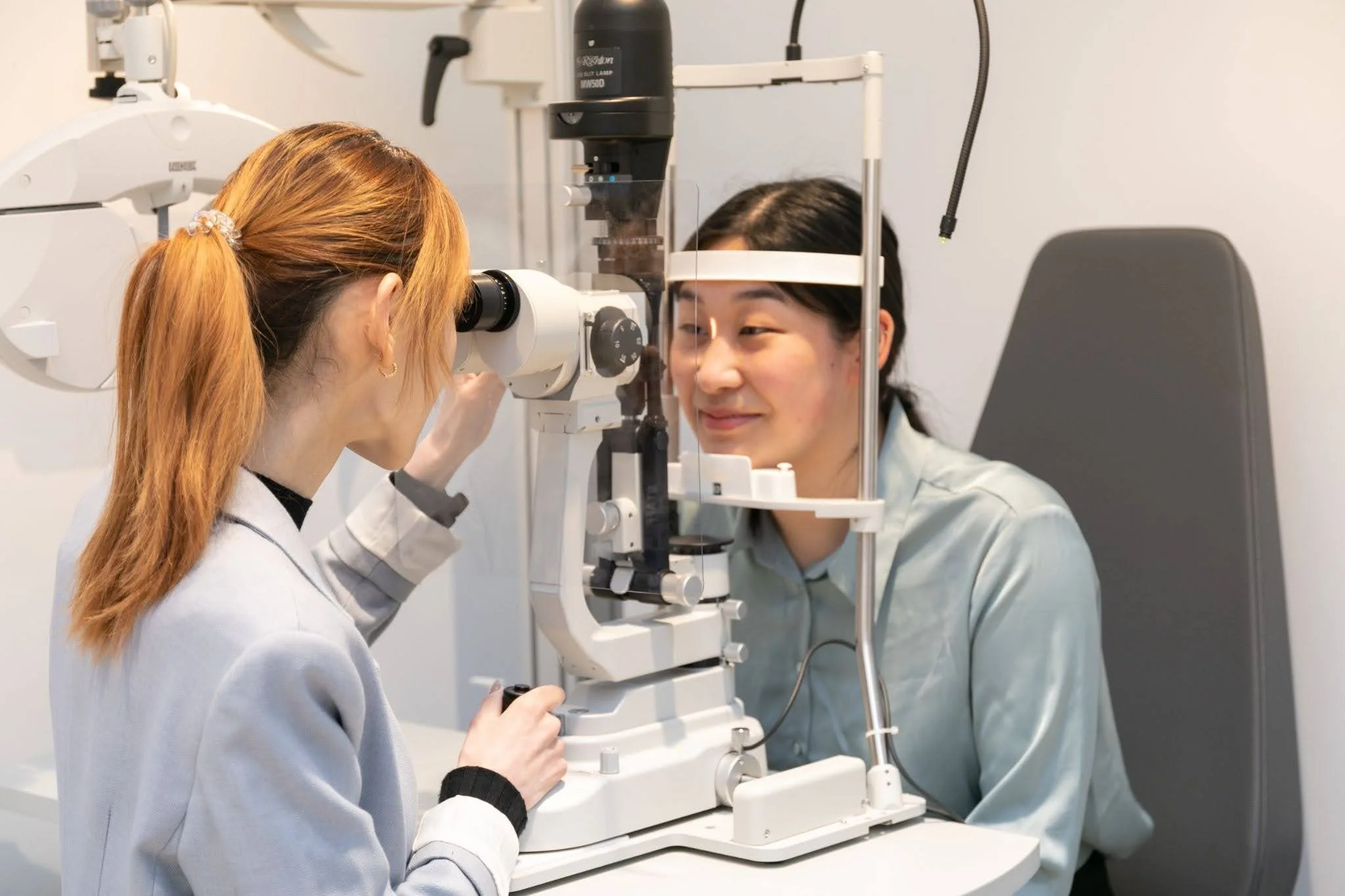
This is where the fitting differs meaningfully from a routine eye test. A contact lens fitting appointment covers several specific clinical steps, each of which helps your optometrist build a precise picture of your eye’s unique shape and needs. Here’s what the process typically looks like at Eye Concepts:
1. Corneal Curvature Measurement (Keratometry)
Your optometrist will use a keratometer — or in some cases a corneal topographer — to map the curvature of your cornea. This measurement is essential because contact lenses sit directly on the cornea, and a lens that doesn’t match the curvature of your eye won’t fit properly. An ill-fitting lens can cause discomfort, blurred vision, and over time, real harm to the surface of your eye.
2. Pupil and Iris Sizing
The diameter of your pupil and iris are also measured during the fitting. These dimensions influence the size of the contact lens that will give you the best centration and coverage — particularly relevant for bifocal and multifocal designs.
3. Tear Film Evaluation
Your optometrist will assess the quality and quantity of your tear film — the thin layer of moisture that keeps your eye surface healthy and comfortable. This step is particularly important for contact lens wearers because lenses can disrupt natural tear distribution. If your tear film is found to be insufficient or unstable, your optometrist will discuss lens types and wearing schedules that minimise dryness and irritation.
4. Contact Lens Prescription Assessment
It’s worth understanding that a contact lens prescription is not the same as a spectacle prescription. Because glasses sit approximately 12 millimetres from your eyes, the optical lens power needed is calculated differently from the power required for a lens resting directly on your cornea. During your fitting, your optometrist will determine the precise contact lens prescription for each eye, which may differ from your glasses prescription.
5. Trial Lens Fitting and Assessment
Once your measurements are taken, your optometrist will fit you with a pair of trial lenses based on your prescription and corneal measurements. You’ll wear these for a short period during the appointment so your optometrist can assess the fit, movement, and centration of the lens on your eye. Comfort, visual clarity, and lens behaviour are all evaluated before any final prescription is confirmed.
6. Instruction and Follow-Up
Before you leave, your optometrist will walk you through how to insert and remove your new lenses safely, as well as how to care for them properly. A follow-up appointment is always scheduled to check that your eyes have settled well into the lenses and to address any concerns that arise once you’ve had a chance to wear them at home.
The full contact lens fitting appointment at Eye Concepts typically takes between 45 minutes and one hour.
Types of Contact Lenses Prescribed at Eye Concepts

One of the most important outcomes of a contact lens fitting is determining which type of lens suits your eyes, lifestyle, and prescription. Your optometrist will discuss the options in detail, but here’s a brief overview of the main categories:
Daily Disposable Contact Lenses
Daily disposables are single-use lenses worn for one day and then discarded. They require no cleaning or storage solution, making them an extremely convenient option — particularly for people who wear lenses part-time or who travel frequently. They’re also the preferred choice for many patients with dry eyes or allergies, as there’s no opportunity for protein deposits to build up on the lens surface.
Monthly and Extended Wear Contact Lenses
Monthly lenses are replaced at the end of each month and require daily cleaning and proper storage. Some extended wear lenses are approved for overnight use, though your optometrist will advise whether this is appropriate for your individual eye health. Monthly lenses can be a cost-effective option for full-time contact lens wearers.
Toric Lenses for Astigmatism
If you have astigmatism — where the cornea is slightly irregular in shape rather than perfectly round — standard spherical lenses won’t correct your vision adequately. Toric contact lenses are specifically designed for astigmatism and are weighted to stay correctly oriented on the eye. Both daily and monthly toric lenses are available.
Multifocal Contact Lenses
Multifocal contact lenses work similarly to progressive spectacle lenses, incorporating both distance and near correction into a single lens. They’re typically recommended for patients over 40 who are experiencing presbyopia—the age-related gradual loss of near focusing ability.
How a Contact Lens Prescription Differs From a Glasses Prescription
This is a question that comes up regularly at Eye Concepts, and it’s an important one to understand before your contact lens fitting appointment.
A spectacle prescription is calculated for lenses that sit in a frame roughly 12 millimetres from the surface of your eye—the technical term for this distance is the “vertex distance.” A contact lens, by contrast, rests directly on your cornea. That difference in position means the power required is calculated differently, particularly in higher prescriptions.
In practical terms, your contact lens prescription will include several values your glasses prescription doesn’t: the base curve (the curvature of the back of the lens), the diameter, and the specific brand or material, because lens design affects how a prescription performs in practice. All of this is determined through your contact lens fitting, which is why it cannot simply be inferred from an existing glasses prescription.
Looking After Your Contact Lenses
Proper lens care is an essential part of contact lens wear — and something your optometrist will cover in detail during your contact lens fitting appointment at Eye Concepts. Poorly maintained lenses are one of the leading causes of contact lens-related eye infections and complications, so the guidance you receive at your fitting is genuinely clinical in nature, not just administrative.
Key principles your optometrist will discuss include:
· Washing and thoroughly drying your hands before handling lenses
· Using only fresh contact lens solution — never tap water, which carries microbial risks
· Replacing lenses on the schedule recommended by your optometrist (daily, fortnightly, or monthly)
· Never sleeping in lenses unless they are specifically approved for extended wear by your optometrist
· Attending regular aftercare appointments to monitor your eye health on an ongoing basis
According to Optometry Australia guidelines, wearers who follow their prescribed replacement schedule and attend regular aftercare reviews are significantly less likely to experience contact lens complications. If you ever notice redness, pain, or sudden changes in your vision while wearing contact lenses, you should remove them immediately and seek professional advice.
Frequently Asked Questions About Contact Lens Fitting
How long does a contact lens fitting appointment take?
At Eye Concepts, a contact lens fitting appointment typically takes between 45 minutes and one hour, depending on the complexity of your prescription and the lens type being assessed. First-time wearers may need a little extra time to practise insertion and removal with their optometrist before leaving the clinic.
Is a contact lens fitting covered by Medicare or health insurance?
A contact lens fitting consultation is generally not covered by Medicare as a standalone appointment, though some private health funds with optical extras may provide a partial rebate. We recommend checking your policy with your insurer ahead of your appointment. Our team at Eye Concepts can advise on the costs involved when you call to book.
Can I get contact lenses if I have astigmatism?
Yes—toric contact lenses are specifically designed for astigmatism and are widely available in both daily and monthly formats. The key is having a thorough contact lens fitting so your optometrist can confirm the correct toric parameters for your eyes. Many people with astigmatism wear contacts comfortably and successfully.
How often do I need to have my contact lens prescription reviewed?
Your optometrist will advise on the ideal review frequency for your situation, but as a general guide, annual contact lens aftercare appointments are recommended for most wearers. Regular check-ups allow your optometrist to monitor the health of your cornea and tear film, and update your prescription if your vision has changed.
What if my contact lenses feel uncomfortable after the fitting?
Some mild awareness of the lens during the first few days of wear is normal as your eyes adjust. However, if you experience persistent discomfort, redness, or blurred vision, you should contact Eye Concepts promptly. Your follow-up appointment—scheduled as part of your original fitting—is specifically designed to address any settling-in issues. Do not simply stop wearing the lenses without speaking to your optometrist, as in some cases the fit may need a minor adjustment rather than a complete change of lens type.
Book Your Contact Lens Fitting Appointment at Eye Concepts
If you’re thinking about contact lenses—whether for the first time or after a break from wearing them—the right starting point is a dedicated contact lens fitting consultation with one of our optometrists. The process is thorough, unhurried, and tailored to your individual eyes.
Eye Concepts has clinics across Australia, and our optometrists are experienced in fitting a wide range of lens types for all prescriptions, including toric and multifocal designs. To get started, simply book an appointment at your nearest Eye Concepts clinic.